Bluetooth® Product & Mobile App
UX Design for a Connected Mobile + Hardware Product Suite
UX Designer (Project Lead)
I design physical and digital product ecosystems that solve critical user problems at launch and scale with clarity over time. My approach blends research-backed insights, thoughtful experience design, and strong UI systems, ensuring teams can innovate confidently while maintaining a competitive edge.
DCI came to our team with a complex challenge: design a mobile experience that pairs with their Bluetooth-enabled drilling hardware and brings their breakthrough Absolute GPS positioning technology to life.
This technology maps the underground path of a bore within 3 millimeters of accuracy, a critical advancement in an industry where poor documentation frequently leads to damaged utilities, costly delays, and safety risks.
The goal was not just to build an app. It was to create a reliable, field-ready product suite that empowered drilling crews to work:
Faster by reducing manual data capture
Safer through precise location tracking
Smarter with accurate, real-time information
With over 50 collaborators across hardware engineering, product management, QA, and external development partners, this was a true cross-discipline effort. By the second half of the project duration, I was the sole UX designer responsible for the mobile app experience and the graphical interface for the physical hardware.
Research & Persona Development
Discovery, Observation & Validation
Our clients provided access to trusted beta users across active drilling teams, giving us an invaluable window into real-world workflows. We conducted interviews, on-site observations, and iterative testing, measuring usability with UMUX, task success, difficulty ratings, preferences, and ease-of-use metrics.
Key insights that shaped the entire product
Auditory alerts were unreliable in loud work environments.
→ We prioritized haptic feedback for critical notifications.
Glare, weather, and harsh sunlight affected visibility.
→ UI components needed high contrast, adaptable iconography, and rugged clarity.
Crew members relied heavily on muscle memory and speed, not deep navigation.
→ Interfaces were simplified with clear pathways and forgiving error recovery.
Persona Development
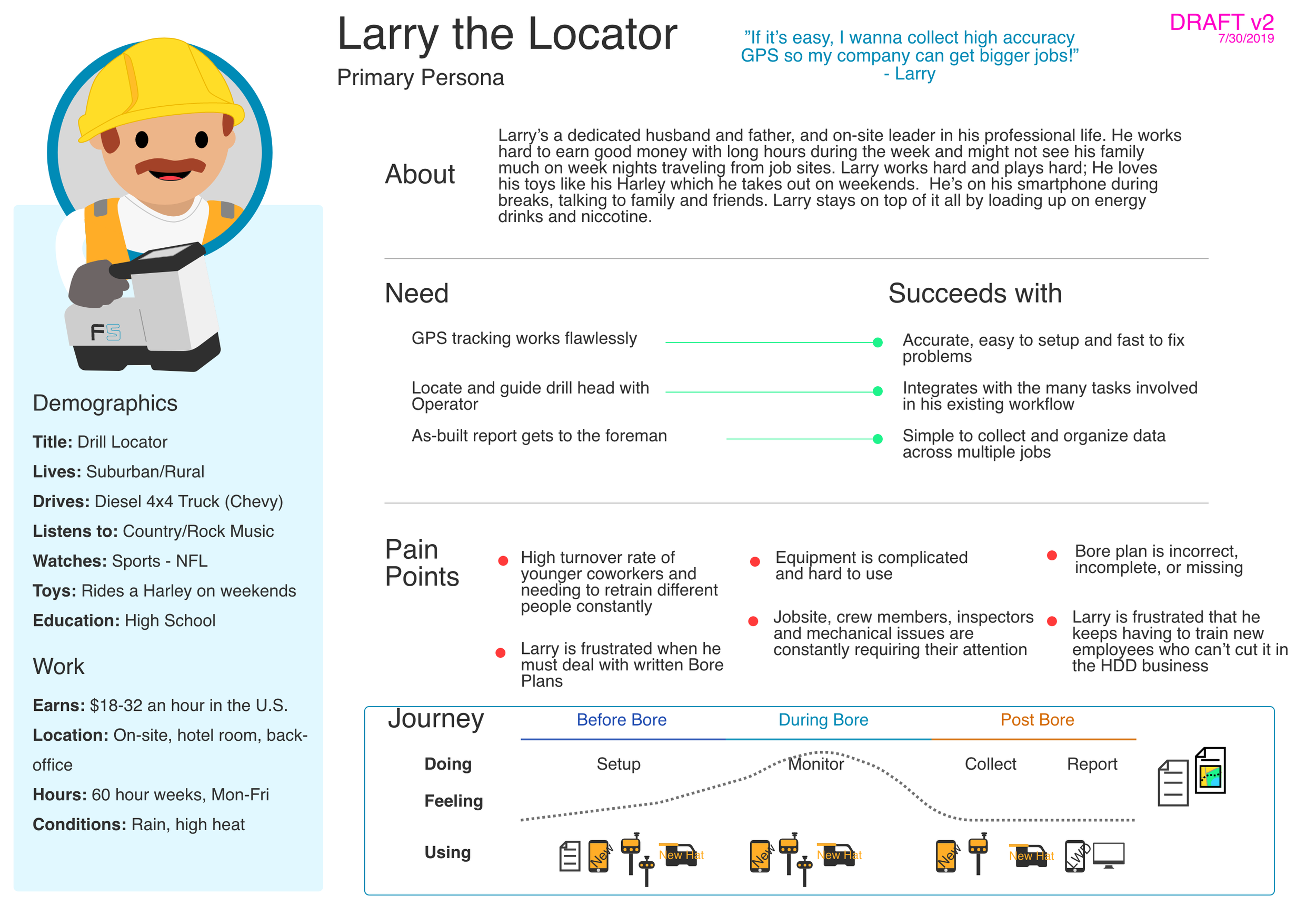
Persona draft from 2019 developed by UX Lead Cami Farley
We created a primary persona, Larry Locator, which quickly became the storytelling anchor across a large, multi-team environment. This persona helped streamline conversations, align decisions, and keep the full product team focused on what mattered most: keeping users safe, efficient, and informed.
UX & Interface Design
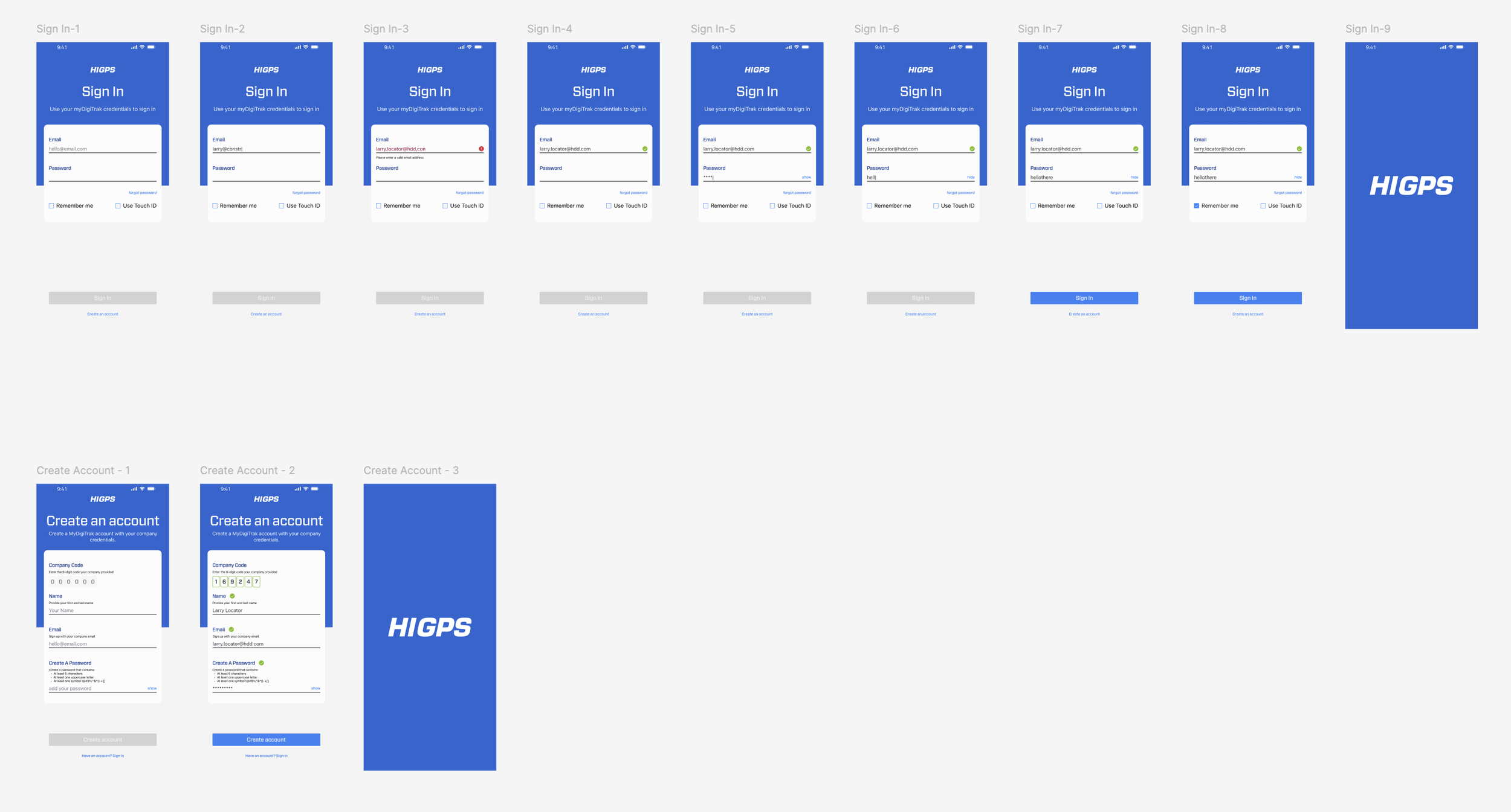
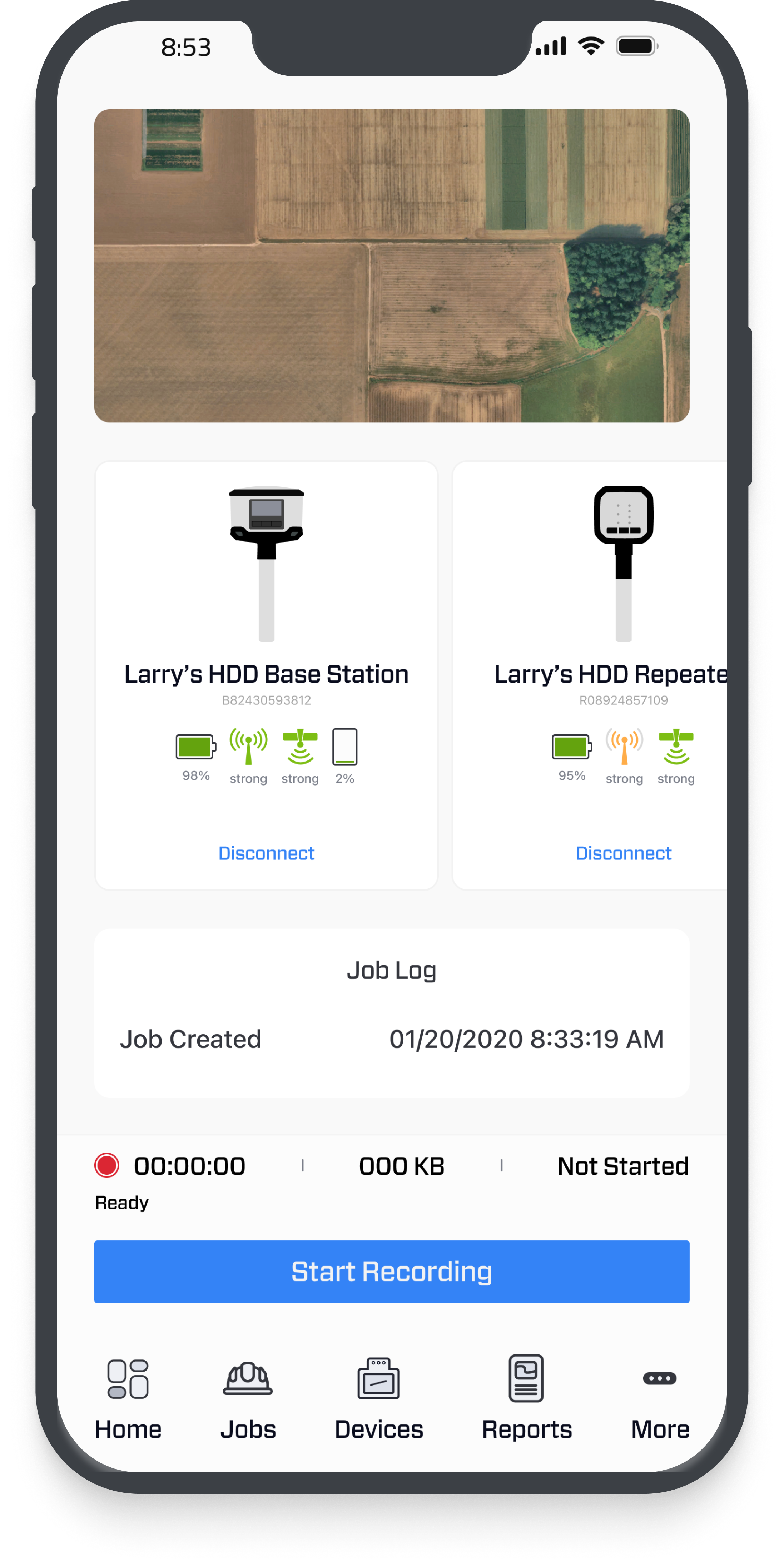
I designed over 20+ end-to-end flows, including the core job flow and a wide range of edge and error states, critical for field environments where data loss or corruption could have real safety and financial consequences.
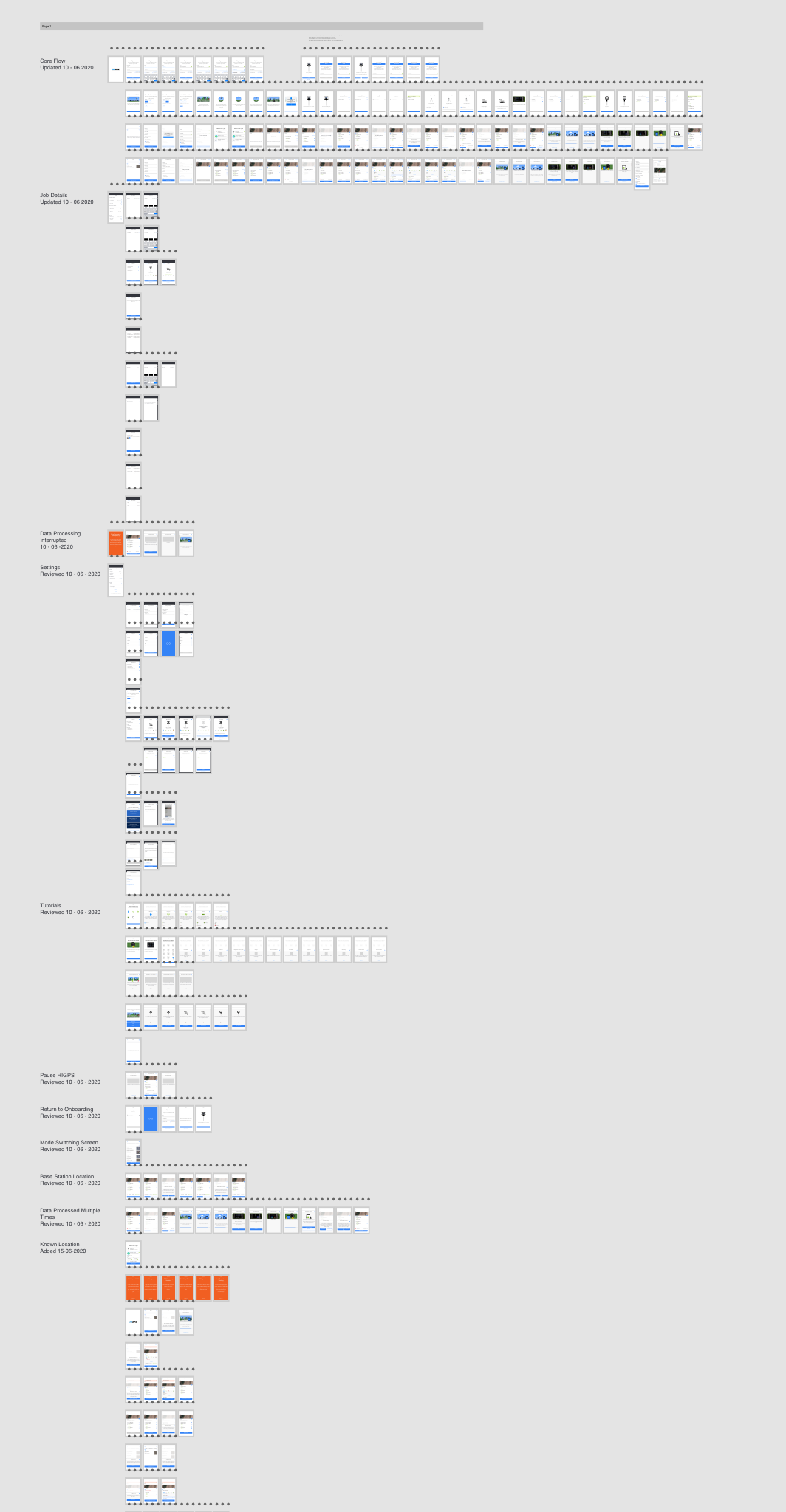
My UX work emphasized:
Reducing cognitive load for users working under pressure
Safeguarding workflows through smart defaults and guardrails
Prioritizing clarity, including offline, reconnecting, recovery, and low accuracy modes
For the UI, I created a cohesive visual foundation that elevated usability and system performance:
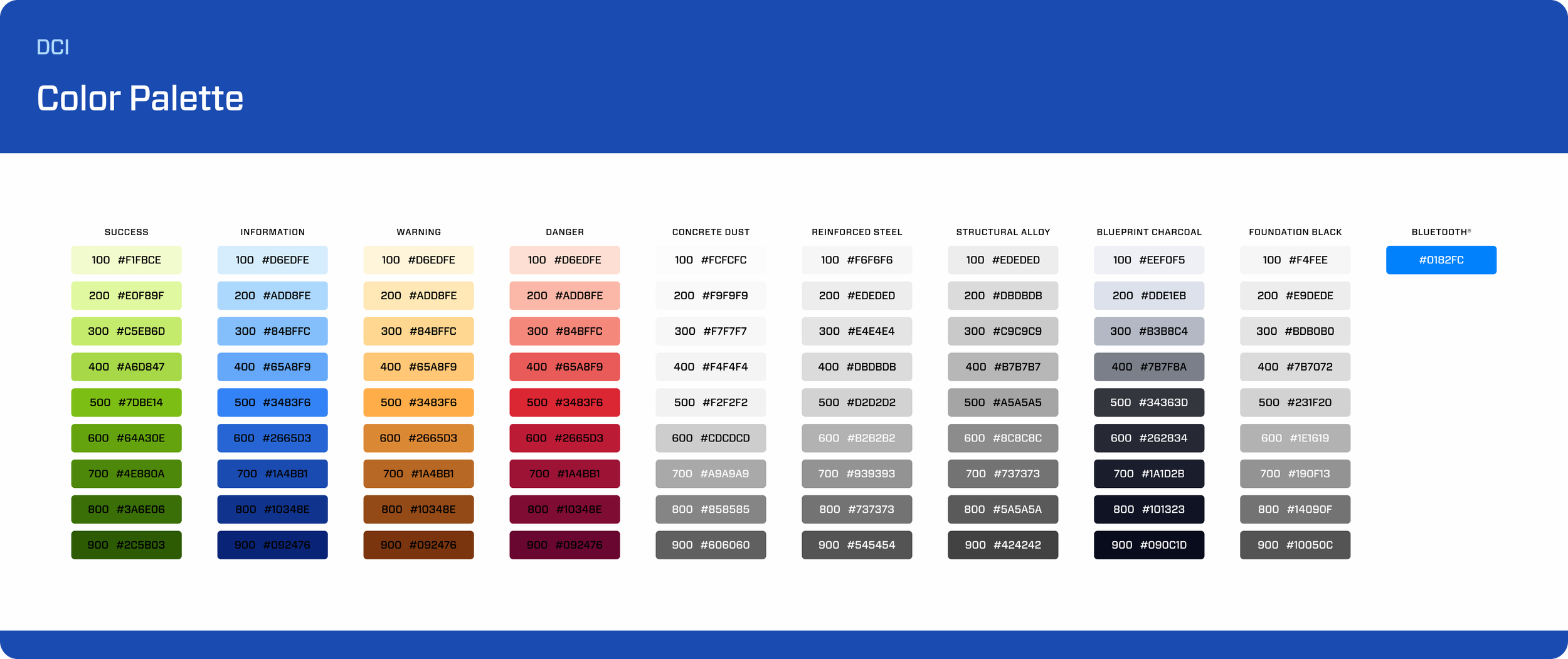
Defined a semantic color system with 100–900 scales
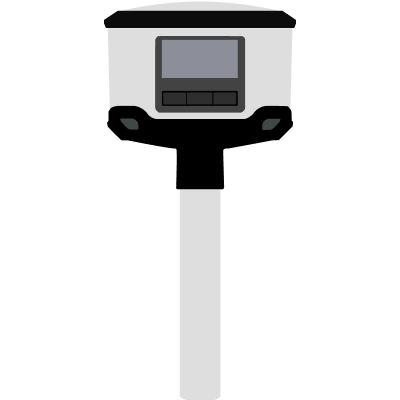
Created custom icons and device illustrations
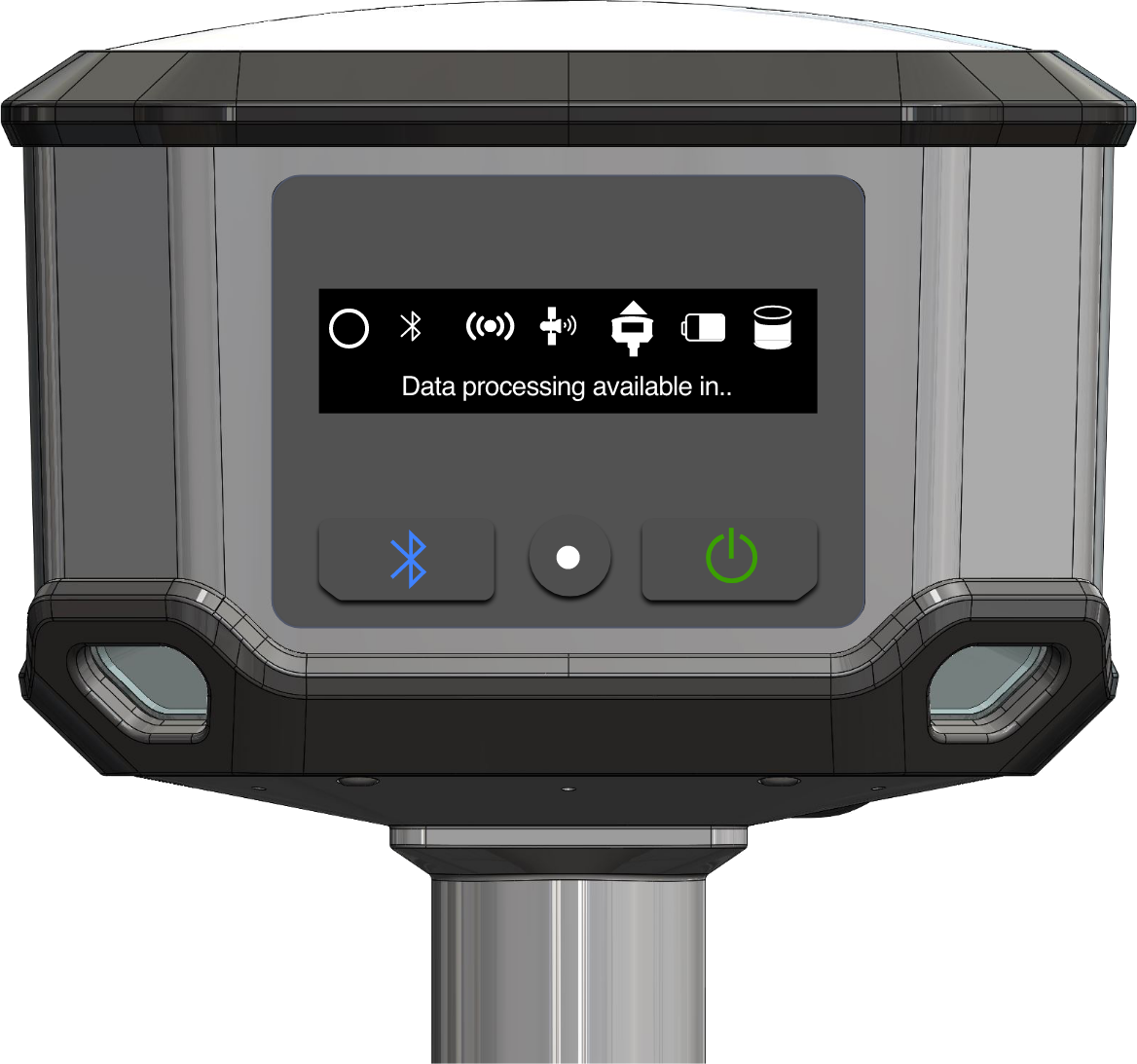
Designed hardware screen graphics to ensure the physical and digital experiences felt unified
Developed UI patterns that aligned with brand identity while remaining fully field-ready

This work laid the foundation for a modular design system that future product teams could extend.
Interact with the core flow in Figma.
My Learnings & Growth
This project was foundational in my early career. As the only UX designer embedded in a large, multidisciplinary team, I learned how to drive clarity across complex technical conversations, define UX milestones that aligned with engineering constraints, use Jira and documentation to communicate success criteria clearly, advocate for users and connect needs to business goals, and balance research, speed, and iterative refinement.
My work and growth on this project ultimately led to my promotion from UX Designer to UX Design Lead at the agency. In that role, I expanded beyond delivery into shaping internal processes, strengthening collaboration with sales and client teams, and helping lead DE&I efforts across the organization.